Showing posts with label Naval Langa. Show all posts

SHORT STORIES WITH REVIEW OF BOOKS

Here are several short stories. The writer is Naval Langa. About the writer: let his writing decide what he is. The short stories which are given here narrate the situations in the lives of Indian men and women. However, these situations would occur in any society, in any country, as men and women face similar questions whenever they are facing relationship issues.


SHORT STORIES 

Short stories are often seen as a condensed form of literature, but their definition is more complex than simply being "a brief fictional prose narrative." While they are indeed shorter than novels and typically focus on a limited number of characters, this definition fails to capture the unique essence of the form. 

A true short story isn't just a mini-novel; it's a genre with its own distinct purpose and structure. It's a snapshot, a single moment captured in time, designed to create a specific impression or mood. 

Unlike a novel, which can explore multiple subplots and character arcs, a short story is built around a singular event, a central conflict that drives the narrative forward with precision. 

Every word, every sentence, is carefully selected to contribute to the overall effect. The goal isn't to tell a life story but to reveal a truth about human experience through a concentrated and impactful narrative. In a way, a short story is like a powerful punch, delivering its message with a quick, decisive impact, while a novel is a long, winding journey.


India has a rainbow-like cultural spectrum. Mirroring the same would be a real challenge. This compilation of short stories emerges from the engagements of personal and social relations and from contemporary circumstances, which shape them. 


WOMEN PROTAGONISTS

You've hit upon a fascinating and crucial point about these short stories. It's not merely that the protagonists are women, but rather the deliberate act of placing them "on a stage where masculinity calls the shots" that becomes a significant source of dramatic tension and thematic exploration. This isn't simply about representation; it's about a strategic inversion of power dynamics within the narrative space.

Consider the implications of this staging. By centring women, the stories inherently offer a critical lens on the prevailing patriarchal structures, exposing their limitations, injustices, and often, their absurdities. The "challenges" these women face are not abstract; they are frequently rooted in societal expectations, gender roles, and the implicit or explicit dominance of male figures or systems.

Furthermore, the fact that each protagonist "deals with the challenges in distinctive ways" underscores the multifaceted nature of female experience. We are not presented with a monolithic "woman" but rather a spectrum of responses – resilience, rebellion, quiet subversion, strategic negotiation, or even internal struggles shaped by external pressures. This variety prevents the narratives from falling into simplistic portrayals and allows for a richer exploration of agency within constrained environments.

A critical angle might delve into how these distinctive approaches are depicted and what they ultimately reveal. Do the stories celebrate outright defiance? Do they highlight the subtle power of endurance? Or do they perhaps critique the limitations even within these individual strategies? Are there instances where the "stage" itself, the very fabric of the patriarchal world, ultimately circumscribes even the most valiant efforts?

Looking closer, one might analyse the narrative techniques employed to achieve this centring. Are the stories told from a female perspective, granting us intimate access to their thoughts and feelings? Are male characters relegated to the periphery or portrayed in ways that expose their flaws or complicity in the existing power structure? What symbolic weight is given to spaces traditionally associated with women, and how do these spaces become sites of resistance or self-discovery?

In essence, the prevalence of female protagonists in these stories is not a passive observation but an active artistic choice that positions the narratives as potential sites of critique, resistance, and nuanced exploration of gender dynamics. The "centre stage" they occupy becomes a space for challenging the dominant discourse and offering alternative perspectives on power, agency, and the very experience of navigating a world shaped by masculine prerogatives.


The characters and situations in these short stories are drawn from everyday life. The places are recognisable. The ordinary homes, the regular scenes of offices, and the interrelationship disputes. The situations these characters face pose almost comparable problems. However, how the protagonists discover the solutions to their problems is unconventional. It is a novel and a rebellious one. 


 My Mother's Pencil Sketch

The narrative centers on a woman trapped in a suffocating marriage, facing her husband's blatant infidelity with a profound sense of powerlessness. She is unable to confront him or escape the situation, feeling completely helpless against his controlling nature. 

The betrayal is a silent burden she carries, one that isolates her further within her own home. But in her despair, she finds an unexpected glimmer of hope. Her solution lies not in fighting her husband directly, but in a desperate, unlikely alliance. She turns to her stepson, a person with whom she has a strained, distant relationship. 

Their past is filled with animosity and unspoken tension, a wall of resentment built over years. The stepson, a young man who has always been a source of conflict, now becomes her only confidant and potential ally. 

The story explores the delicate and fragile process of her reaching out, laying bare her vulnerability in a gamble that could either save her or shatter her world completely. It's a tale of finding strength in an improbable connection, proving that a desperate situation can lead to the most surprising alliances.

In all of these stories, the characters are from ordinary strata of society.  They are neither extraordinary nor unbelievable. You would find a common thread running through these stories, feeling a sense of continuity. Nevertheless, each story stands alone in its own right.   

 The Salt of Life

An aged woman, passing through the evening years of her life, finds herself caught in a strange situation. She cannot live with her son and his family. She and her husband had carved out a good fortune for their family. By doing hard labour. After her husband died, her dependency resulted in a stream of deep pain. She finds out a novel solution at the fag end of her life.


In this short story, The Handicapped, a boy struggles to become an entrepreneur. He wants to stand on his feet. He did not want help due to his being handicapped. He seeks permission to start a shop, providing telephone services to the people. The officials make him run from pillar to post. He finds a solution, a strange one. 

THE WOMAN WHO STOLE A LIFE

Her husband is absconding. From the law. He had already disowned his relationship with her. She has a one-year-old baby girl of one year. She had no future. She had no resources to carry on life. She is standing on a strange curve in her life. She finds an unusual solution.

Catch The Grave Fast 

It's a short story, narrating the helplessness of the weak people at the hands of the strong. The people grant power to the state to regulate the law and order of society. The power-holders start killing those who do not conform to their beliefs and norms.

 MY NEST ON MY WINGS  

The couple loses interest in each other. The husband develops an extramarital affair.  The wife, being a level-headed woman, wants to know the real reason for her husband's behaviour. Here she meets the woman with whom her husband has relations. She is shocked after knowing the fact. She tailors a novel solution.  


The protagonists in these short stories are capable of springing surprises. Their responses to the challenges are strange, even for those who are familiar with Indian life and culture. 

They Are Poor: They Aren't Beggars  

In this short story, the self-respect of a poor woman is highlighted. She needs help. But she refused to accept cash from her friends. She wants to work. She wants to survive on the fruits of her own labour only. She is poor. She is not a beggar.


The short stories have almost every characteristic a novel or a novella can have, except it is shorter in length. A short story carries a plot, it develops the characters and imparts a message to the reader community.


Recalled To Life    

In this short story, the protagonist woman shapes her life at distant premises. She goes out of his restrained life and lives with her in-laws. Composing the unexpected changes in her conduct, she manages the activities of farming. She had found out a peaceful solution to her ruined life.


It is still undecided how the form of the short story is different from other forms of fiction. One known theory is that the short story is a fictional narrative that can be read in one sitting. Are you satisfied with this concept? I am not. 


The Parting Gift: Narrating Parental Love   

In this short story, the protagonist woman finds a wonderful character in the grandmother of her would-be husband. The old grandmother, living in a remote village, explains how parental love and affection are essential for better living.


It is believed that a short story must have a beginning and end. William Somerset Maugham believed that "it must have a definite design, which includes a point of departure, a climax and a point of the test; in other words, it must have a plot”. 

When Fiction Visits The fact 

In this short story, a strange incident occurs. There is a writer. She writes novels and short stories. Obviously, she creates characters. To her utter surprise, one young woman comes to her house and tells her that it is her, the woman writer's, responsibility to take care. Why? Because she was the character the woman-writer had created. The characters so created cannot be left orphaned by their writers.

Anton Chekhov, one of the most celebrated short-story writers, once said, "A story should have neither a beginning nor an end. It should just be a 'slice of life', presented suggestively. Yes, you would find a "slice of life" in the short stories presented here. So, carry on reading.

 The Near Relative

The story narrates the breaking of a relationship. It also narrates how relationships are revived. It reveals how the separated souls, a man and woman who loved each other, come together again.

There are practical aspects, too, due to which the short-story form has remained undefined. What should be the length of a short story? That is the main aspect. Generally, it is believed that a short story should contain 2000 to 7000 words. Fine. If it is less than that, it is a Short Short Story. Okay? If it is longer, it is a novella. Fine. It's a genuine-looking concept. 

 My Mother's Remarriage

The protagonist in this short story, a young woman who is still unmarried, is facing a strange situation. She had endured the most culpable act at the hands of a man whom she trusted most. That had created a permanent hate space for the species of males in her mind. Then her mother creates a novel situation. She finds an innovative solution.


There are awards for short story writers. Some of them are:

  1. The Sunday Times Short Story Award
  2. BBC National Short Story Award
  3. The V.S. Pritchett Short Story Prize,
  4. The London Magazine Short Story Prize,
  5. The Pin Drop Studio Short Story Award and many others  

 Fear: The Enemy Of Love

When a woman meets an ex-lover of her present lover, it creates a situation wherein one faces the fear factor. Here, the lover of the protagonist woman is gravely hurt by a miscreant, and the ex-lover comes to meet him. It is very interesting to know how both the mature ladies talk and decide the future paths of their lives.  


The form of short stories is as old as the ancient epics, as these epics contain several short stories as their sub-stories, along with the main story.

 The Transplant: The Woman Who Paid Her Bill Well

This is the story of a bold woman. She had faced the odds. Unbelievable odds. But she had got help from a motherly woman. Unfortunately, the motherly woman falls ill; she suffers from a strange disease. The young woman was indebted to her. She finds an unusual solution to the problem.

In the modern age, the form of the short story has acquired its own credibility. The short story writers are no longer the novelists-in-waiting. They can survive just by writing short stories. 

 The Vicarious Wings

This is the story of a woman who had missed the bus in her younger years. A similar situation reoccurs in her family. After twenty years. His brother denies his daughter the liberty to undergo higher studies in another city. The elder aunt, who had missed the bus, came to her help. Both women jointly find a solution.


It is a humorous short story. For a change, try it. It's a ten-minute reading.


The thread running through the story is the fear factor.


[ Image Courtesy: Edward Robert Hughes, Public domain, via Wikimedia Commons]

SHORT STORIES by NAVAL LANGA

Catch The Grave FastA short Story Narrating the helplessness of the weak at the hands of the Strong.

The CheaterIt's the story of a woman who is cheated in love.

The Handicapped: In The Handicapped, a boy struggles to become an entrepreneur; he has to wrestle to acquire a license for setting up his own small business enterprise.

THE WOMAN WHO STOLE A LIFEWhat would a woman or a man do when he or she is responsible for caring for a child and is driven out of her/his house? Here it is narrated what a brave woman did. 


For a Detailed Index of the Short Stories, Please go to 

HOME PAGE 


TERMS OF RELATIONSHIPThis short story narrates how the terms of relationships change in an orthodox society.

The Salt of LifeHere a woman in her late fifties is ready to give her life a fresh start.

The Parting Gift: A young woman finds peace in a village house.

MY NEST ON MY WINGSIt's a story of a woman who shows courage to face the strange odds of her life.


For a Detailed Index of the Short Stories, Please go to 

HOME PAGE 


Recalled To LifeIt is the story of a protagonist woman who along with her in-laws challenges the odds of life.

They are poor: they are not beggarsIt's the story of the woman who endeavours to make her life on her own efforts and not by others' kindness and pity.

My Mother's Pencil SketchThe young protagonist, a boy, finds his real mother's love in his stepmother.

When Fiction Visits The Fact: In this short story, the writer has tried to narrate and show that sometimes we face a strange situation. We are unable to decide whether an incident occurring before our eyes are FACT or a FICTION. Here, by the word 'we' I do not mean only the writers and poets. If anyone has encountered such an incident in his or her life, please let me know about it.

The TransplantIt is a story of a young woman who has to struggle while donating one of her kidneys to her motherly woman.


For a Detailed Index of the Short Stories, Please go to 

HOME PAGE 


The Vicarious WingsFreedom comes at a price: that is the lesson the protagonist woman teaches to her elders. : 

Fear: The Enemy Of LoveThe protagonist goes through a series of mental tortures, as she fears that her lover's past lover will surface again and would snatch her man.

Your Nest On Your WingsA woman caught in a strange situation attempts a novel solution for her breaking/failed marriage.

My Mother's RemarriageA young woman who hates the 'men' flock en masse, faces a problem at the time of her mother's remarriage.

For a Detailed Index of the Short Stories, Please go to 

HOME PAGE 

CRITICAL STAGES IN A LAWYER'S LIFE - A HUMOROUS TALEIt's a humorous short story concerning the lawyers' and their clients' lives.

[IMAGE COURTESY: James Carroll Beckwith, Public domain, via Wikimedia Commons]

Short Story: Catch Your Grave Fast


Author - Naval Langa

I LIVE IN A STREET where dogs hardly bark at the residents, not even during nighttime. It is because they have never seen a new face that can be identified as a suspected thief. 

The knowledge of these dogs about the community of thieves is so poor. But the reason for their ignorance is simple: most of the thieves in the city do live in our area. 

These dogs sometimes bark so high that the wealthy people living around them lose their sleep. 

    They shout and scream at the dogs and us, believing that the dogs and we people are equally responsible for the loss of their good sleep. We—the hawkers, the labourers, and the drunkards—have never complained about the dogs’ barking exercises. The hutment dwellers and the dogs live in almost similar conditions. 

    But at this point in time, I am not in my street, nor I am in my house which is made of an assemblage of bamboo and grass. Only one plastic shield is put on it, just to protect it from mild rain. Heavy rain is welcome from every nook and corner. 

At this moment I am not in my area, too. I am on the floor, the insensible floor of a government-run hospital. Here the doctors and nurses treat every patient equally, whether the patient is dead or alive. 

But I do not know why I am here, in this hospital, on this floor. I have not been ill for years; despite the clouds of efficient mosquitoes daily visiting our area. They, the two men sitting on the chairs, talk that now I should be handed over to my family members. Till this moment they were doing several things to me. Now they look uninterested in me. Why? Because I am dead. I am a dead body. 

They have not attended to me until I was alive; they have no reason to care for me, as my breathing has stopped now. 

I do not know why I am dead. 

       ******

I WAS JUST DOING my work, pulling my hand-lorry on the tenth street of the main road. I do not remember the incidence of my dying, as these people discuss—these nurses and a peon. The peon chews beetle nuts. He picks into the corner that is just near my head. Doctors have gone home after tagging me as ‘dead body No. 12’. 

I just recall one thing. There was a huge procession of people, passing on the main road. It is a recurring disease in our city. But suddenly there sprouted out thunderous noises. People started running. The screaming of women deafened ears. Then the policemen started thrashing men, women and children with their canes as if they were waiting for that. 

The other group of policemen carrying loaded guns in their hands felt insulted, perhaps, when they saw their coparceners using canes and proving themselves more powerful. No sooner they, the gunmen in uniform, started firing their gadgets declaring that they were second to none. 

I had no chance to run away. I was with my hand lorry, full of weight. At that moment, I felt something being pierced into my back, something like a pointed iron rod. I do not remember what they did with me until I was declared dead and was numbered as a dead body. 

The floor is stinking with chloroform. There I see a man with a camera, standing near my feet. I think he would take my photograph and give it to my wife. And my wife, keeping our one-year-old daughter in her arms, would run in here, and get me out of this foul-smelling passage. But the gentleman with a camera is less interested in me. He looks eager only to know the total figure of those like me, the dead bodies. 

*******

I, THE DEAD BODY, am still lying on the cold floor. The air has become too cold on this late December night. 

“We will have to do a post-mortem of all these,” the man in a long white coat speaks. He looks at all of us as if we are blocks of dead wood.

“Sir, there are twelve bodies in all. It would ruin our whole night, sir.” One sweet-voiced lady doctor is just beside him. 

“We need their hearts, their kidneys, and the lungs for our colleges.” 

So, along with my eleven colleagues, they transport me into a room that has no windows. The cell is so foggy that I am unable to know what they are doing with all of us. 

        ***********

WE ALL ARE THROWN on the same floor again, and it is early morning. We all are packed in grimy yellow gunny bags. I have a line of stitches from my throat to the navel. No blood, no pain. 

Now I realise that my weight is reduced. I have no heart, no kidneys and no lungs. I do not know for what purpose I owned kidneys and lungs. But what about the heart? I need it. I need it every day. Without it how would I love my wife and daughter? My little daughter has just learnt to speak ‘mama’ and ‘papa’. The doctors should have spared my heart at least.

You may be wondering why I am telling you all this. I know it is quite a routine subject for you: you read such things every day in papers. But I think I must tell you how I feel going through this experience, the experience of being a dead man. 

We belong to two different types of identities: myself being a dead man and you are still a living person, perhaps. Communication between you and me is necessary. We, you and I, live on two opposite banks of a river. I want to become a bridge. 

                *****

I AM STILL ON THE same unattended floor, and it is the second day morning. Perhaps the doctors have issued all of us to be sent out. They have left nothing useful with us, within us. 

Since twenty-four hours, the air is deadly silent. But suddenly the whole earth wobbles. I hear the incessant screaming. My wife is at the gate, beating her chest, praying to the gateman to let her come inside. 

“Bring proof that he was your husband,” one doctor says to her. 

Her ‘Mangal Sutra’ proves insufficient proof of her being my wife. She goes back, crying, beating her chest and forehead; but no one allows me to talk with her. I want to shout; I want to run at her. I ask for help from all the fellow bodies wrapped in gunny bags. But no one of them seems to hear me. They all are dead, completely dead. 

       *********

MY WIFE DOES NOT RETURN. I am unable to wait, as it is becoming unbearable. I decide to do something on my own. I gather some courage. I try to stand up. I take the help of the nearby wall. I know I need to go out. I need to talk with others who are still alive. To my surprise, I am now on my own feet,  walking slowly on the road. 

The road is bare, bare like the forehead of a widow. Rows of houses are gloomy and silent as mourners. No one is visible on the main road too. Only some shops are burning their closing stocks. It is not dark yet. The entire city looks like wearing the clothes of a deadly silent curfew. 

There start sudden noises. A big crowd shouting dangerous slogans runs on the road. And behind that crowd, I see some trucks. I see all of my eleven fellow dead bodies sleeping on the trucks. Each dead body was decorated as the bodies of heroes. People are shouting their names and calling them martyrs. I feel insulted, as I am deprived of such an honour. 

People around me say that they have paraded these dead bodies on all the roads and in different localities—Hindu dead bodies in Hindu localities, and Muslims in Muslim localities. Then within hours, the dead bodies start swelling. They grow in numbers; they grow in size; they swell up to the last hutment of the city. 

The policemen are again out with those controlling canes. People have sparkling draggers and iron rods in their hands. But I do not fear now. The gunmen in uniform again start their preferred tasks, converting people like you into dead bodies like me.

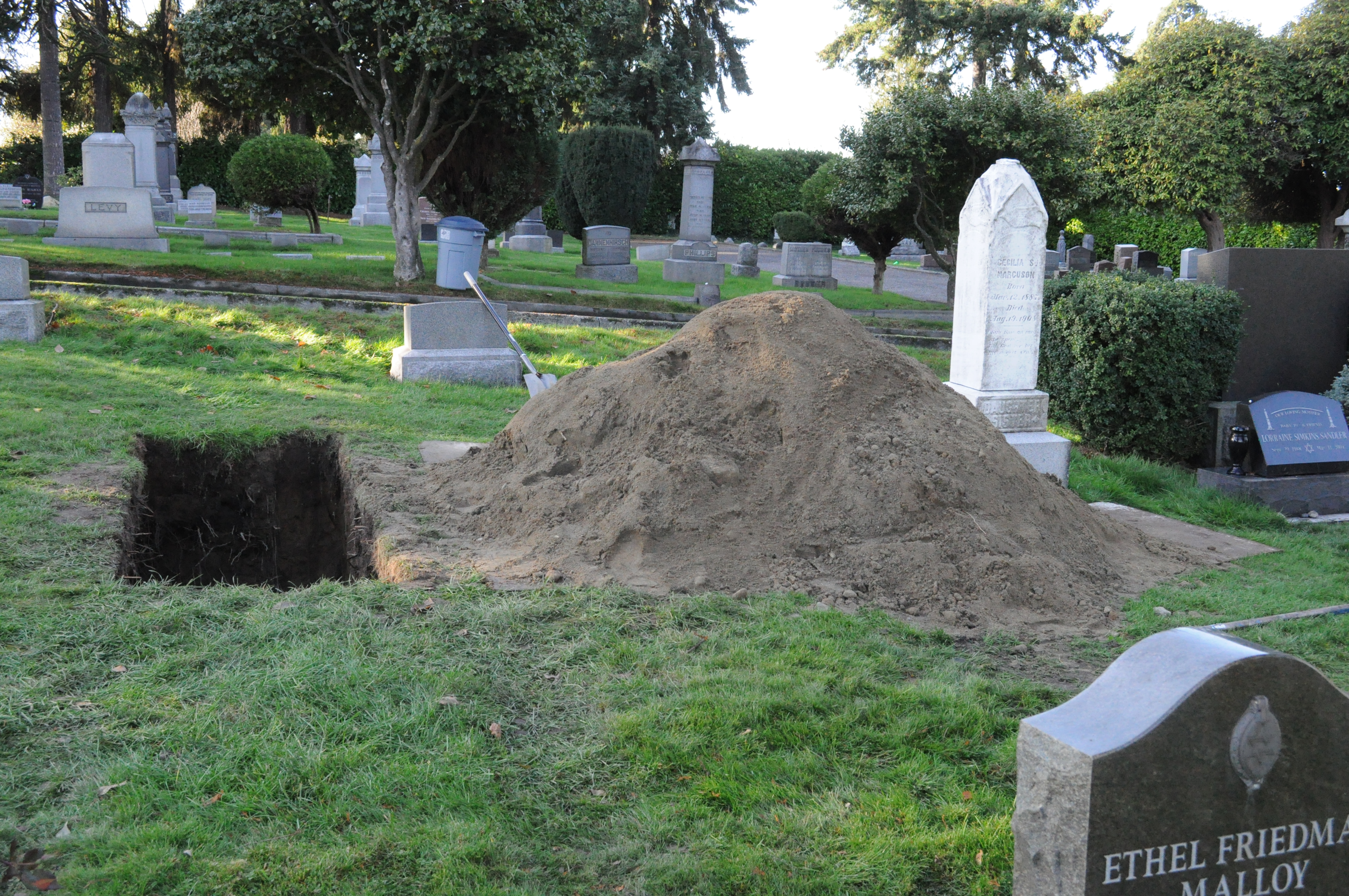
I am now near a cemetery. I just open its iron gate, rusted by non-use. It quakes like the bone of a dead man. Going inside it, I feel comfortable. There would be a grave for me, I think, hopefully. There must be a place where I can sleep without encountering further difficulties.

I find out an open, recently dug grave. On the bank of the grave, there lays a corpse, too. The corpse is well covered in costly cloth, perhaps a man from a wealthy quarter. Perhaps, those who have come to bury the corpse have run away. 

I do not think further. I have no options left. I want to lay myself in the grave. Just lie for the rest of my life. I know I am doing the right thing, a prudent act. I am doing the very thing the wise men of the world do when they are required to act decisively. I am doing the same thing philosophers do when people need active participation. 

I hurry to catch hold of the grave. I know it is the safest and most peaceful place available on earth. I know it is going to be crowded within a short period. If I do not get hold of the grave just now, I may not get it again. There will be a shortage of graves, too. I simply slip into the grave. 

The gunmen are still engaged in their job.  

END


[Image courtesy Joe MabelCC BY-SA 3.0
via Wikimedia Commons]