Showing posts with label Short Story. Show all posts

Short Story: Catch Your Grave Fast


Author - Naval Langa

I LIVE IN A STREET where dogs hardly bark at the residents, not even during nighttime. It is because they have never seen a new face that can be identified as a suspected thief. 

The knowledge of these dogs about the community of thieves is so poor. But the reason for their ignorance is simple: most of the thieves in the city do live in our area. 

These dogs sometimes bark so high that the wealthy people living around them lose their sleep. 

    They shout and scream at the dogs and us, believing that the dogs and we people are equally responsible for the loss of their good sleep. We—the hawkers, the labourers, and the drunkards—have never complained about the dogs’ barking exercises. The hutment dwellers and the dogs live in almost similar conditions. 

    But at this point in time, I am not in my street, nor I am in my house which is made of an assemblage of bamboo and grass. Only one plastic shield is put on it, just to protect it from mild rain. Heavy rain is welcome from every nook and corner. 

At this moment I am not in my area, too. I am on the floor, the insensible floor of a government-run hospital. Here the doctors and nurses treat every patient equally, whether the patient is dead or alive. 

But I do not know why I am here, in this hospital, on this floor. I have not been ill for years; despite the clouds of efficient mosquitoes daily visiting our area. They, the two men sitting on the chairs, talk that now I should be handed over to my family members. Till this moment they were doing several things to me. Now they look uninterested in me. Why? Because I am dead. I am a dead body. 

They have not attended to me until I was alive; they have no reason to care for me, as my breathing has stopped now. 

I do not know why I am dead. 

       ******

I WAS JUST DOING my work, pulling my hand-lorry on the tenth street of the main road. I do not remember the incidence of my dying, as these people discuss—these nurses and a peon. The peon chews beetle nuts. He picks into the corner that is just near my head. Doctors have gone home after tagging me as ‘dead body No. 12’. 

I just recall one thing. There was a huge procession of people, passing on the main road. It is a recurring disease in our city. But suddenly there sprouted out thunderous noises. People started running. The screaming of women deafened ears. Then the policemen started thrashing men, women and children with their canes as if they were waiting for that. 

The other group of policemen carrying loaded guns in their hands felt insulted, perhaps, when they saw their coparceners using canes and proving themselves more powerful. No sooner they, the gunmen in uniform, started firing their gadgets declaring that they were second to none. 

I had no chance to run away. I was with my hand lorry, full of weight. At that moment, I felt something being pierced into my back, something like a pointed iron rod. I do not remember what they did with me until I was declared dead and was numbered as a dead body. 

The floor is stinking with chloroform. There I see a man with a camera, standing near my feet. I think he would take my photograph and give it to my wife. And my wife, keeping our one-year-old daughter in her arms, would run in here, and get me out of this foul-smelling passage. But the gentleman with a camera is less interested in me. He looks eager only to know the total figure of those like me, the dead bodies. 

*******

I, THE DEAD BODY, am still lying on the cold floor. The air has become too cold on this late December night. 

“We will have to do a post-mortem of all these,” the man in a long white coat speaks. He looks at all of us as if we are blocks of dead wood.

“Sir, there are twelve bodies in all. It would ruin our whole night, sir.” One sweet-voiced lady doctor is just beside him. 

“We need their hearts, their kidneys, and the lungs for our colleges.” 

So, along with my eleven colleagues, they transport me into a room that has no windows. The cell is so foggy that I am unable to know what they are doing with all of us. 

        ***********

WE ALL ARE THROWN on the same floor again, and it is early morning. We all are packed in grimy yellow gunny bags. I have a line of stitches from my throat to the navel. No blood, no pain. 

Now I realise that my weight is reduced. I have no heart, no kidneys and no lungs. I do not know for what purpose I owned kidneys and lungs. But what about the heart? I need it. I need it every day. Without it how would I love my wife and daughter? My little daughter has just learnt to speak ‘mama’ and ‘papa’. The doctors should have spared my heart at least.

You may be wondering why I am telling you all this. I know it is quite a routine subject for you: you read such things every day in papers. But I think I must tell you how I feel going through this experience, the experience of being a dead man. 

We belong to two different types of identities: myself being a dead man and you are still a living person, perhaps. Communication between you and me is necessary. We, you and I, live on two opposite banks of a river. I want to become a bridge. 

                *****

I AM STILL ON THE same unattended floor, and it is the second day morning. Perhaps the doctors have issued all of us to be sent out. They have left nothing useful with us, within us. 

Since twenty-four hours, the air is deadly silent. But suddenly the whole earth wobbles. I hear the incessant screaming. My wife is at the gate, beating her chest, praying to the gateman to let her come inside. 

“Bring proof that he was your husband,” one doctor says to her. 

Her ‘Mangal Sutra’ proves insufficient proof of her being my wife. She goes back, crying, beating her chest and forehead; but no one allows me to talk with her. I want to shout; I want to run at her. I ask for help from all the fellow bodies wrapped in gunny bags. But no one of them seems to hear me. They all are dead, completely dead. 

       *********

MY WIFE DOES NOT RETURN. I am unable to wait, as it is becoming unbearable. I decide to do something on my own. I gather some courage. I try to stand up. I take the help of the nearby wall. I know I need to go out. I need to talk with others who are still alive. To my surprise, I am now on my own feet,  walking slowly on the road. 

The road is bare, bare like the forehead of a widow. Rows of houses are gloomy and silent as mourners. No one is visible on the main road too. Only some shops are burning their closing stocks. It is not dark yet. The entire city looks like wearing the clothes of a deadly silent curfew. 

There start sudden noises. A big crowd shouting dangerous slogans runs on the road. And behind that crowd, I see some trucks. I see all of my eleven fellow dead bodies sleeping on the trucks. Each dead body was decorated as the bodies of heroes. People are shouting their names and calling them martyrs. I feel insulted, as I am deprived of such an honour. 

People around me say that they have paraded these dead bodies on all the roads and in different localities—Hindu dead bodies in Hindu localities, and Muslims in Muslim localities. Then within hours, the dead bodies start swelling. They grow in numbers; they grow in size; they swell up to the last hutment of the city. 

The policemen are again out with those controlling canes. People have sparkling draggers and iron rods in their hands. But I do not fear now. The gunmen in uniform again start their preferred tasks, converting people like you into dead bodies like me.

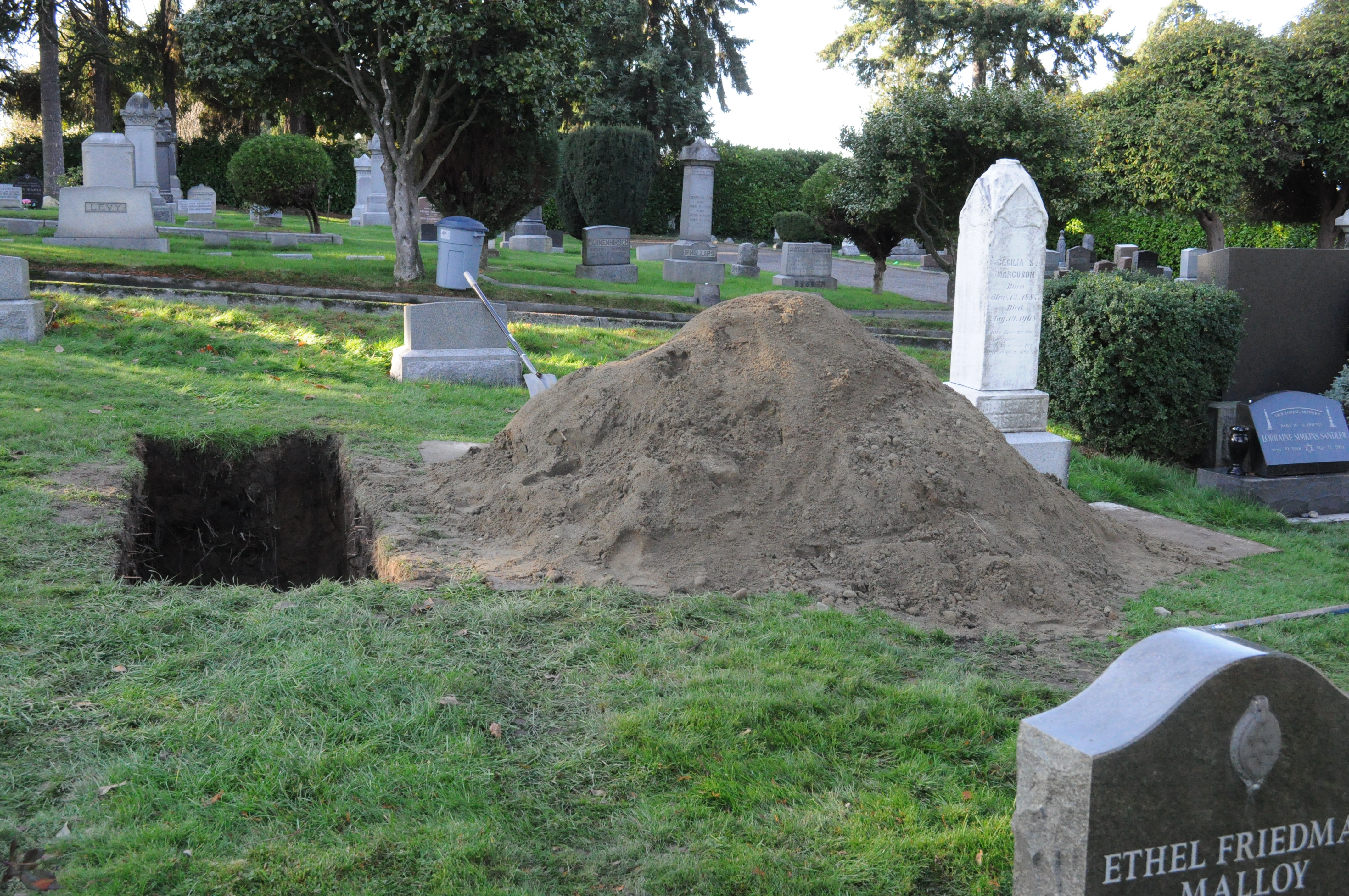
I am now near a cemetery. I just open its iron gate, rusted by non-use. It quakes like the bone of a dead man. Going inside it, I feel comfortable. There would be a grave for me, I think, hopefully. There must be a place where I can sleep without encountering further difficulties.

I find out an open, recently dug grave. On the bank of the grave, there lays a corpse, too. The corpse is well covered in costly cloth, perhaps a man from a wealthy quarter. Perhaps, those who have come to bury the corpse have run away. 

I do not think further. I have no options left. I want to lay myself in the grave. Just lie for the rest of my life. I know I am doing the right thing, a prudent act. I am doing the very thing the wise men of the world do when they are required to act decisively. I am doing the same thing philosophers do when people need active participation. 

I hurry to catch hold of the grave. I know it is the safest and most peaceful place available on earth. I know it is going to be crowded within a short period. If I do not get hold of the grave just now, I may not get it again. There will be a shortage of graves, too. I simply slip into the grave. 

The gunmen are still engaged in their job.  

END


[Image courtesy Joe Mabel, CC BY-SA 3.0, 
via Wikimedia Commons]

THE NEAR RELATIVE : A SHORT STORY

Author - Naval Langa

THE CHEST PAIN has subsided, but coughing has not. It keeps me feeling like I am on a rock and going to fall in a valley. Mama is reading something. Good. Otherwise, she would sing her song, targeting me: it’s all your doing. Other three faces are sitting silently as if they have come to see me for the last time.

“We need one person to talk with. Who is the patient’s near relative?” Two nurses with interchangeable heads come inside. Looking at the walls, one of them asks anyone of us who wants to answer. I fail to decipher what she means by the term ‘near relative’. But I am sure that all the persons encircling my cot have understood the meaning, as they are looking at each other. Everyone seems unwilling to be my near relative. My mother seems unaware of it, perhaps, as she is struck by the incidents taking place in her daughter’s life.

At the age of thirty-eight, I cannot be my mother’s responsibility. Nor she is capable to help me, too. But she has carved out a firm belief: had I been living with my husband, there would have not occurred such a painful situation.

“He was not a man to be left so gracelessly.” My elder brother opens his mouth. That is what he believes and says in front of my relatives, my maternal uncle and aunt, too.

“Do you know Rekha, how much your operation would cost?” My maternal uncle passes hand on his increasing bald, trying to educate me about the billing pattern of doctors. His chartered accountant-ship has made him a near relative of the figures only. He cites figures in thousands only, omitting three zeroes. In fact, his whole vocabulary is targeted at me. But missing the target, it frightens my mother.

It is as clear as tears that my bank balance is too weak to bear the blows to come from the doctor’s billing computer. Nor my employers are in a mood to pay even a penny for my hospitalised expenses. They are modern-minded; they are quite professional, and they want to reduce manpower. My illness may provide them with a good pretext to throw me out.

“You are required to deposit the amount by tomorrow morning.” The doctors, I have heard so, hardly involve a patient in the hard talks about the diseases. But on failing to locate any near relative of mine, an assistant doctor tells me about three options of payment: in cash, by a cheque, or through a credit card. If I add all the three means, it would hardly be the half amount needed. And I am still sane; so I am unable to fantasize that a saviour from the sky would come and pay the bill for making my heart suitable to last longer.

“If you still don’t undergo the surgery…” The chief doctor had not completed the sentence. But I am sure he meant that without doing the operation I would be a gone case.

“Bye-pass surgery is too costly.” My brother leaves the room.

“It’s all your doing.” Mama is still displeased for my past behaviour.

*****

MY MARRIAGE WITH Sunil was not an accident. Nor it was an incident preceded by any noteworthy affair. I was still on the side of sanity, unmarried until I met him. The night had not started yet, but the sun had set. I met him in a company meeting, and a simple file-pushing clerk in me became the wife of a key figure in the city’s industrial group.

I was assisting my executive director in those days. “I like neat administrator like you.” That was what Sunil told me in a narrow lounge of the Hotel where our company held meetings with its clients. I took his words as a simple pat on my back. If taken in another way, it was subtle flirting, too.

“You’re generous, Mr Sunil.”

“No. I am serious, Ms. Rekha.”

It was early January. He was in a neat blue suit and my not-so-thin body experienced a tremble, even within a woollen wrapper. The season changed. Warmth replaced the cold. My company issued me a licence to meet Mr. Sunil, the top industrialist in the city, at any time I can get his appointment. The genuine invitations for dinner replaced our professional meetings. And by the end of June, the day came on which we were accepting wedding gifts in the Reception Hall of the same hotel where Sunil and I had met for one simple business meeting.

*****

IF MY SALARY INCOME was a pebble, then Sunil’s business income was a big rock. There were workers in his factory earning more than my salary. But for me, the calculation was different. Were my income and the independence to be added, it would have been a big amount. Hence I preferred a continuation of my job. It was not a problem until the day we were returning from a huge party given by Sunil’s friend.

“Rekha, we do not talk so loudly among friends as you talk.” The reference to the friends was secondary. Primary was his emphasis on ‘we’ and ‘you’. Within the spell of five kilometres, the distance between the party hall and our home, he educated me about the precise meaning of the words ‘we’ and ‘you’. He counted all the incidents where I had behaved like a middle-class woman.

The axe had made its mark. Only the blood was to come out. It came out on the day of our first wedding anniversary. It was an arid event of showing heartless joy and talking about stereotype matters regarding Sunil’s business and friends. I had not insisted on the presence of my personal friends. Nor did he talk about my invitees.

“You know Rekha, these people rule the whole city’s economy.”

“Sunil, do you expect me to discuss the economy? It is our first wedding anniversary.”

“Yes, and that’s why I have gifted you a new car.”

“I do not need a car for going to my office.”

“Rekha you don’t need to go to the office at all. It’s a middle-class mentality. Better you manage our purchase department.”

******

THE LINE OF DIFFERENCE was clearly drawn from that day. On the next day, he openly told me to resign from my job. I protested. But the next year involved Sunil’s tours outside the country and I had started forgetting about the difference between ‘we’ and ‘you’. I started believing that the class conflict was over. 

My nightmare did not last long.

“We should talk about a child.”

“Good.” I was not as cold as he thought, perhaps.

“Rekha, It’s impossible to look after a child and attend the office.”

“There are millions of working mothers.”

“All from the middle class.”

“Stop it Sunil. I’m fed up with this.” I might have shouted.

The days passed and we were not husband and wife, virtually. We were not a family, too. Merely sleeping in one bedroom does not make a man and a woman a family. The day of decision was to come, sooner or later. It came sooner.

“Choose between a child the job.” Sunil was not in two minds.

To have a child was not my dislike. I still want to be a mother, a good mother. But under the circumstances, my choice was simple. I decided against trusting a man who was unable to bear the independent income of his wife. I had my mother, a brother, and a house built up by my father to go back. They all became my enemies from that day.

Two years passed making the distance between ‘we’ and ‘you’ wider. I had heard, that too from my brother, that Sunil was preparing divorce papers. But there was no communication.

*****

THE MORNING IS as lightless as it can be on someone’s funeral day. Doctors have not come yet. There are only nurses, wearing coffin-grey dresses, looking subdued after the sleepless night. Before selling all the gold I possess, and discounting all the finance-worthiness I have, to take a second opinion of another doctor would be better: that is what I am chewing with my morning tea and biscuits. The entire hospital is deadly silent. Had my mental traffic been able to blow horns, there would have been great noise around.

My near or the distant relatives would not come today. Mama might come at noon. So I feel relieved. But the hardest thing was yet to come. A nurse informs me about a visitor. I thought about someone from my office. Before the visitor comes, the assistant doctor stands in the middle of the door, without looking at me.

“It’s time for the final deposit. Who is the patient’s near relative?”

“I am her nearest relative.”

A man with the words of authority enters the scene. 

He stops near the doctor for a handshake. First thing I can see is his neat blue suit, and then the well-polished shoes. He is the man whom I had met the first time at the hotel where my company held meetings for its clients. He is the man who had told me that ‘I like neat administrator like you.’

He drags the stool nearer and sits.

“Sunil, who told you…”

“No. Heart patients are not allowed to talk more, you know.”

He looks weaker, eyes pail, face ageing. It is almost two years I saw him last time. The vigour that handles his business single-handedly is missing. But the lively voice marks his presence, effectively. The doctor goes away. Sunil avoids talking about who informed him about my illness and everything.

“In fact, I want to get a second opinion about it, the bye-pass.”

“It’s up to you, dear. But I have arranged one week’s vacation. And this room is comfortable for a patient and one attendant. Isn’t it?”

Half an hour of his being here wipes out the factors of time and space, which have run between us. From the window I believed as closed, the brightness of the sun enters. It turns the air warmer. It makes the patient’s room more comfortable for seeing the man’s face clearly.

Sunil’s hand is on my head, fondling my hair. 

END

[Image courtesy  Mary Vaux Walcott, Public domain, via Wikimedia Commons]

MY MOTHER'S PENCIL SKETCH


Author - Naval Langa


ABOUT THE SHORT STORY

The narrative centers on a woman trapped in a suffocating marriage, facing her husband's blatant infidelity with a profound sense of powerlessness. She is unable to confront him or escape the situation, feeling completely helpless against his controlling nature. 

The betrayal is a silent burden she carries, one that isolates her further within her own home. But in her despair, she finds an unexpected glimmer of hope. Her solution lies not in fighting her husband directly, but in a desperate, unlikely alliance. She turns to her stepson, a person with whom she has a strained, distant relationship. 

Their past is filled with animosity and unspoken tension, a wall of resentment built over years. The stepson, a young man who has always been a source of conflict, now becomes her only confidant and potential ally. 

The story explores the delicate and fragile process of her reaching out, laying bare her vulnerability in a gamble that could either save her or shatter her world completely. It's a tale of finding strength in an improbable connection, proving that a desperate situation can lead to the most surprising alliances.

MY MOTHER'S PENCIL SKETCH

THIS IS NOT HIS first attempt at running away from home. The first time he did it when he was thirteen, studying in standard eight. He had run to the bridge but failed to beat the cold that had sent tremors down his spine.

He had again tried it in his first year of college. This time it was for the reason of Sheena. Sanity recovered in two days. Retired hurt. 

Sheena still lives in the street, in the same house, in whose backyard they had passed hot afternoons. Her windows are still transparent, but her big brother keeps hard cloth curtains.

But today is a different day. He has determined to be homeless, finally. He has no plans in mind, no weight in the pockets. In his bag, he takes a few things. One pair of clothes, one pair of football shoes, and an old photograph of his mother, his dead mother.

Past. The word makes him uncomfortable. Why can’t people live with the past? Though his stepmother, Bijaya, has never hurt him. Nor has she considered his presence as upsetting, despite his poor record in school and never attending college properly. 

But that is not enough. 

She never helped to take off his shirt after he played in the rain. She neither scolded him for coming late at night, nor did she shed tears when he was ill. His mother, before she died, did all these things.

But today is a different day. Bijaya removed the pencil drawing of his mother. She wanted the space for an embroidered wall-piece. His mother was a drawing teacher, and the pencil drawing, a self-portrait, was her work displayed on the wall. 

For Amit, it was like a relief. When surrounded by loneliness, he would go near the pencil drawing, put his nose on the frame of the portrait, and smell his mother’s presence.

Today, the smell is shifted, from the drawing-room to the storeroom.

When caught in a web of worries, people remember their relationships, old relationships. Amit goes to Sheena. Now he can meet her freely. She lives in PG Hostel, as she has admission in a post-graduation course. Amit could not. While giving admission, they consider only the marks and not the height of the students.

“It’s not a good ground for leaving home.”

“Sheena, I know. But I… I want my own life now.”

“Okay, I will tell my brother to find a job for you.”

Amit still dislikes her brother’s face, especially his fan-like moustache. But he prefers silence.

*******

MR. GOPAL KRISHNA IS a well-known lawyer. The city knows him by his talent and the high fees he charges. He loved his first wife, Amit’s mother. He gave her money to spend, but failed to give her time and care when she needed it. She died. Amit was in standard five then. 

There was a time when people believed that Gopalkrishna had a soft corner for his secretary, Elena. But they had no evidence to prove the softness. They suspected the joint tours ventured by him and Elena. But they were unable to put their hands on the particulars of any hotel bookings they made while on tours. Mr Gopalkrishna is an advocate. The lawyers are good at destroying the evidence.

But now the Lawyer Gopalkrishna respects his second wife. He gives her money to spend, but does not give her time. He loves his son, too. But he has no time for himself.

Only a week before, Bijaya had succeeded in dragging him into a mall. And to celebrate this unique event, Mr Gopalkrishna purchased a costly wall-piece for her, as she had shown willingness to own it.

The wall-piece built up a wall between her and Amit.

***

THE TIME DOES NOT stop for anyone. It did not stop for the wall-piece that separated Amit from his home. Nor did it stop for the hardships he faced in the initial spell of his job, the job sponsored by Sheena’s brother. The clock ticked for a year.

The day starts from Amit’s feet. A sharp strip of sunrays that an open window allows in heats his feet. It makes him presume that the day should be Sunday. He follows such a strange timetable only on holidays. 

The milkman is late as usual. As the bell of his one-room apartment cries, he walks to the door. The door opens. Surprise visit: shocks happen. Amit finds himself sandwiched between a shock and a surprise. He fails to believe the scene.

“Mam… Mama, you... please come in. Here, sit… sit here please.”

Bijaya looks at the life of her stepson. The bed, the sofa, the clothes, and the articles in a kitchen: these are as disorganised as they would be in a home of a young man who works for twelve hours, eats at wayside restaurants and commutes thirty miles daily in public transport buses.

It takes Bijaya’s full hour to turn Amit’s home into the home of a normal person. He passes this hour with a swirling turmoil in his mind.

“Mama, I am sorry… I should have kept talking with you… on phone at least.” The hot coffee that Bijaya made provides him with a room to talk more. “You know, Mama, I come late at night, and…”

“Your Papa is living with Elena. Since a week.”

The story is painful. It goes on with Bijaya’s incessant tears. Amit feels ashamed and angry, too. Elena lives separately from her husband and serves as secretary to Gopalkrishna. Since his remarriage to Bijaya, the talk of the romance had died its natural death. 

But it has surfaced again. 

Bijaya took their joint tours as part of her husband’s business. But after returning last time, he told her that he would spend nights at Elena’s home. No reasons were given. For Bijaya, it was a crack in the earth. After burning in the fire of suffering for a week, she is before Amit.

“He is a powerful man. I… I’m alone in this world.” Bijaya sobs heavily.

“Oh, how… can you say so, mama? I… you… You have a son, Mama. Look at me. I am your son. And no one can hurt my mother till I am alive. Okay? Please, now don’t, don’t cry. Please... Please, mama.”

Amit sits beside her, and the mother puts her head on her son’s shoulder. She empties everything she has in store.

***

Mr GOPALKRISHNA’S OFFICE remains cool at noon. But it has a visitor today, a young man. 

“Sir… sir is not here. He is at court.” Elena finds no other words to welcome the unusual visitor. A file drops from her hand.

“Mine is a simple work, ma’am. A secretary like you can do it.”

The young man sits in the opposite chair. Looks straight into her eyes. Waits silently until she returns from the cabin. Perhaps after phoning her boss.

“Amit, you know…”

“Look. I am not here for my Papa. I want to talk with you. Please, try to understand.” From his cool words, Elena gets some peace of mind.

“Better we talk in the sir’s presence.”

“Ma’am, I would have been the last person to raise objections against the relationship if you were married to my Papa. Just after my mother’s death. But you didn’t. Why? I don’t know. Had my father still been a widower, I would have comfortably ignored your adventures.”

“Amit, I… I am…”

“Sit down, Elena. Just sit and listen. You have a problem with your ears, perhaps. Otherwise, you might have heard from someone that Mr Gopalkrishna is a married man. He has a respectable wife. And he has a son of marriageable age, too. Do you know? No, you don’t.”

“Amit, you don’t know…”

“Yes, I know nothing. I am still in the cradle, just a boy, okay? But I know that today you will visit my mother’s home. Today. And will ask for her forgiveness. Your boss may be... coming late, and there is no use in consulting him. He is a big lawyer, and this is a very small case. Isn’t it?”

He leaves the office. Quietly. He does not know how he has managed to keep his head cool. The stake was high: the prestige of his family. And he knows that on being challenged openly, how Mr Gopalkrishna, the big lawyer of the city, would use his influence and power. He knows his father. 

To drive Bijaya out of his home was not a big call for him. Had Bijaya agreed to live with him at his one-room apartment, Amit would have got a bigger ring to fight. But she wants a peaceful solution. Peace at any cost. 

Bijaya does not know, but Amit knows that before his remarriage, Gopalkrishna had bought an apartment in Elena’s name. She lives in that apartment.

***

Arriving at the line of depression, at Bijaya’s home, Elena is sitting in front of her. Pleading. Bijaya gazes at her, specifically around her belly. It is flat. Bijaya takes a long breath of relief.

“You know, Mrs Bijaya, I had worked as a teacher in a community school before I joined here. The community people still need me. I have decided to be a teacher again. And I… I thank you for not making anything public. Amit and you are good people.”

After tea and chewing some silent biscuits, Elena empties her case. Bijaya goes up to the gate to see her off. Elena’s car generates a cloud of dust. Bijaya waits until the dust has settled down.

Amit, sitting in another room, is attentive to the scene. He does not surface until both ladies have arranged happiness in their lives. While sitting inside, he does something with a paper and a pencil. After all, he is the son of a mother who was a drawing teacher. He draws a woman’s face.

On completing the drawing, he names it ‘My Mother’.

It was Bijaya’s portrait.

And when he hangs it on the wall, tears gush out from the four eyes.

At that moment, a son is born: at that moment, a mother is born.

SUMMARY OF THE STORY

This short story presents a compelling, albeit potentially problematic, scenario ripe for critical analysis. At its core, it explores themes of power dynamics, female agency, societal constraints, and unconventional solutions. Let's delve deeper:

The initial setup immediately throws us into a world where the protagonist, the wife, exists under the oppressive thumb of her dominant husband. The phrase "helpless against" underscores her lack of autonomy and the potential emotional and social barriers preventing her from directly confronting the situation or leaving. This helplessness could stem from various factors:The story might be set in a context where women are expected to endure marital infidelity, where divorce carries significant stigma, or where their economic dependence on their husbands is absolute. The husband's dominance could extend beyond mere control to emotional abuse, leaving the wife feeling powerless and isolated. She might fear her husband's reaction if she were to confront him, potentially leading to violence or further subjugation.

The husband's "out-of-marriage relationship" acts as the catalyst, a blatant disregard for the marital vows and the wife's dignity. This betrayal likely fuels a sense of anger, humiliation, and despair in the protagonist.

From a critical perspective, this short story offers fertile ground for exploring several key themes:

  • Patriarchal Structures and Female Disempowerment: The story can be analysed through the lens of patriarchal societies where men often hold positions of power and women are relegated to subordinate roles. The wife's initial helplessness highlights the limitations imposed on her by these structures.
  • Agency and Resistance: While initially portrayed as helpless, the wife's act of seeking a solution, however unconventional, suggests a flicker of agency. Her decision to approach the stepson can be seen as an act of resistance, albeit a potentially risky and indirect one.
  • The Complexity of Family Dynamics: The introduction of the stepson complicates the traditional narrative of a wronged wife confronting her unfaithful husband. It brings in issues of blended families, step-relationships, and the potential for unexpected alliances and betrayals.
  • Moral Ambiguity: Depending on the "solution" the wife seeks, the story could delve into morally ambiguous territory. Is she seeking justice or revenge? Is she manipulating the stepson? The lack of clarity here invites critical examination of the characters' motivations and actions.
  • Social Commentary: The story could be a commentary on the limitations faced by women in certain social contexts, the complexities of marital relationships, and the desperate measures individuals might take when trapped in oppressive situations.
Page copy protected against web site content infringement by Copyscape    
[Imaged courtesy Portrait of an Indian Lady