Showing posts with label The Flowers of Evil summary. Show all posts

French Classics: The Phantom of the Opera by Gaston Leroux

Tomb of Gaston
Leroux in Nice
Ederolland EdRCC BY-SA 4.0,
via Wikimedia Commons

The Phantom of the Opera – A Story Told in Shadows and Echoes

Night settles over Paris, and the grand façade of the Opéra Garnier glows beneath gas lamps, its statues gleaming like guardians of forgotten legends. 

Carriages roll to a stop, polished hooves clatter on stone, and fabric rustles as elegantly dressed opera-goers ascend the steps beneath glittering chandeliers. Music pulses inside, violins tuning like nervous birds preparing for flight.

But inside the stone corridors, beneath the velvet and light, another world stirs — a world of echoes, trapdoors, and whispered terror. And somewhere in the endless maze of cellars deep beneath the opera house, a ghost waits, listening.

His story begins long before the screams and collapses and midnight abandonments, but for the world above, it begins on the night the famous Carlotta prepares to sing as usual — and a young chorus girl named Christine Daaé stands unnoticed in the shadows.

The Masked Presence in the Walls

Behind the heavy velvet curtains, stagehands move like insects, adjusting sets and polishing mirrors. Superstitions buzz through the backstage halls like nervous birds. Someone mutters the words the opera house has learned to fear:

The Opera Ghost.

Some say he walks like a shadow, some that he speaks without being seen. A trembling ballet girl swears she saw “a man in a black cloak, with a death’s head for a face.” Another claims the ghost demands payment — an empty box, number 5, left always ready for him.

The managers laugh, but uneasily. When they discover an envelope, the handwriting elegant and terrifyingly calm, ordering compliance, they feel the chill settle through bone.

“You must leave Box Five for the use of the Ghost.”

Far below, the ghost listens. His name is Erik — though few know it — a man brilliant and terrifying, master of architecture, music, and illusion. His face, disfigured from birth, is a mask of death that drove the world to reject him long before he found the catacombs of the opera house. Now he moves through hidden corridors with silent precision, shaping the building like a puppet master controls marionettes.

Christine’s Voice Awakens

When Christine Daaé steps upon the stage to replace Carlotta unexpectedly, the audience prepares to mock the timid chorus girl. But then comes a voice not merely human — a voice clear as crystal, rising like a prayer, trembling with sweetness and heavenly force. The theater freezes. Hearts stop. Music fills the air like light itself.

Among the listeners is Raoul de Chagny, the young viscount who once played with Christine as a child by the sea. He grips the edge of his seat, stunned. He sees not the shy girl he once knew, but a woman transformed, glowing.

And somewhere unseen, the Phantom watches, enthralled.

Christine returns backstage pale and trembling, and Raoul rushes to her dressing room. He hears her speaking softly — but to no one he can see.

A voice speaks to her from the mirror, tender and commanding:

“Christine, you must love me!”

Raoul bursts in, but the room is empty. The mirror stands still, reflecting only fear.

Tomb of Gaston Leroux in Nice
Ederolland EdRCC BY-SA 4.0,
via Wikimedia Commons

The Angel of Music

Christine confesses through tears that since childhood she believed her father would send her an Angel of Music to guide her voice, and that now she hears that angel speaking, teaching, praising her. 

Raoul sees only danger; Christine sees salvation.

Night after night, the voice returns, filling her room with an invisible presence, lifting her voice toward the divine. She kneels like a devout disciple, believing she has been chosen.

The voice tells her:

“I am not an angel, nor a ghost — I am Erik.”

But she does not yet understand. She only hears beauty.

Descent Below the Stage

In a moment that feels like slipping from reality, the mirror of her dressing room swings open like a door, revealing a narrow black passage. Christine, trembling, follows the voice. The mirror closes behind her with a soft click, like the sealing of fate.

Raoul, pounding at the door, hears nothing but echo.

Deep beneath the opera house, Christine rides a black horse beneath vaults dripping with water. A cavern opens, lit by thousands of candles shimmering over the black lake. A boat glides across the glowing water, the voice singing to her like a lover.

“Fear nothing, and come.”

She sees a world built from silence and obsession: tunnels, music rooms, traps, mirrors, and flowers that never die. The Phantom removes his mask for her — a fatal mistake — and Christine screams, recoiling in horror at the skull-like face, a face stripped of humanity.

Erik collapses in agony at her reaction, sobbing like a child beaten by fate. She feels pity bloom inside her like a painful rose.

But he has crossed a threshold: he loves her, and love for him is not gentle — it is hunger.

Jealousy and Threats from the Deep

Aboveground, the ghost’s anger shakes the opera house. When Christine refuses to obey him fully, and rumors of her deepening bond with Raoul flicker through the corridors, the Phantom strikes.

During a performance of Faust, Christine sings again with supernatural beauty — and Raoul watches her from Box 14 just as Erik watches unseen from Box 5. Their eyes meet across an impossible distance, tension sharp as electrified wire.

Suddenly, the grand chandelier trembles. Screws loosen. Crystals rain like shattered stars. With a scream and a thunderous crash, the chandelier falls into the audience, crushing seats and bodies beneath gilded iron.

Panic erupts.

People flee. Officials demand reason. The Phantom leaves a note written in cold, perfect calm:

“Know that you shall obey me.”

Christine vanishes. Raoul knows she has been taken.

The Labyrinth and the Pursuit

Raoul descends into the cellars guided by the Persian, a mysterious man who knows the secrets of Erik’s past. They journey through darkness thick as tar, past torture chambers and mirrored mazes, past rooms designed to twist the mind. Flames blaze without warning, traps spring without mercy.

The Phantom has prepared hell for anyone who would steal his love.

They hear Christine’s sobs echoing:

“Erik, you frighten me! Take off the mask!”

But Erik refuses. His love is agony. He begs, threatens, weeps. He places a gold ring on Christine’s finger, demanding marriage, promising that if she refuses, everyone above will die — the opera house will burn, flooded with explosives he has wired beneath the stage.

Raoul pounds against the walls, tortured by powerlessness.

The Choice

Christine stands between two worlds: Raoul’s innocence and Erik’s infernal devotion. Her voice, trained by a year of invisible lessons, trembles with grief. Erik’s face contorts between rage and despair.

Then she does what no threat, no force, no magic could command. She steps toward him and places her lips gently upon his ruined skin. He freezes, trembling, stunned.

He whispers, broken:

“Christine, you wept for me.”

No one has ever kissed him. No one has ever shown him love without terror.

The world collapses inside him. He releases Raoul, tears the ring from Christine’s finger, and tells the couple to flee, promising never to harm them. He sobs in the darkness, a creature undone by kindness.

Christine and Raoul escape into the night, their hearts torn and burning.

The Phantom returns to his underground palace and disappears into legend.

Later, the newspapers publish a small notice:

“Erik is dead.”

No body is found. The opera house remains haunted by silence.

Themes and Meaning of The Phantom of the Opera

Baudelaire gave Paris a man broken by beauty and rejected by society. Gaston Leroux transforms this into a novel about:

  • The devastating hunger for love

  • The cruelty of appearances

  • The line between genius and madness

  • Art as salvation and obsession

  • Compassion as the most powerful transformation

Erik, the Phantom, is neither monster nor angel — he is human, wounded beyond endurance. Christine learns that beauty lies not in faces but in souls. Raoul represents innocence, but Erik represents the tragic power of passion.

In the final silence of the catacombs, the story leaves us trembling:
Where does love end and obsession begin?
Who is the monster — the man abandoned, or the world that abandoned him?

French Classics: The Flowers of Evil by Charles Baudelaire

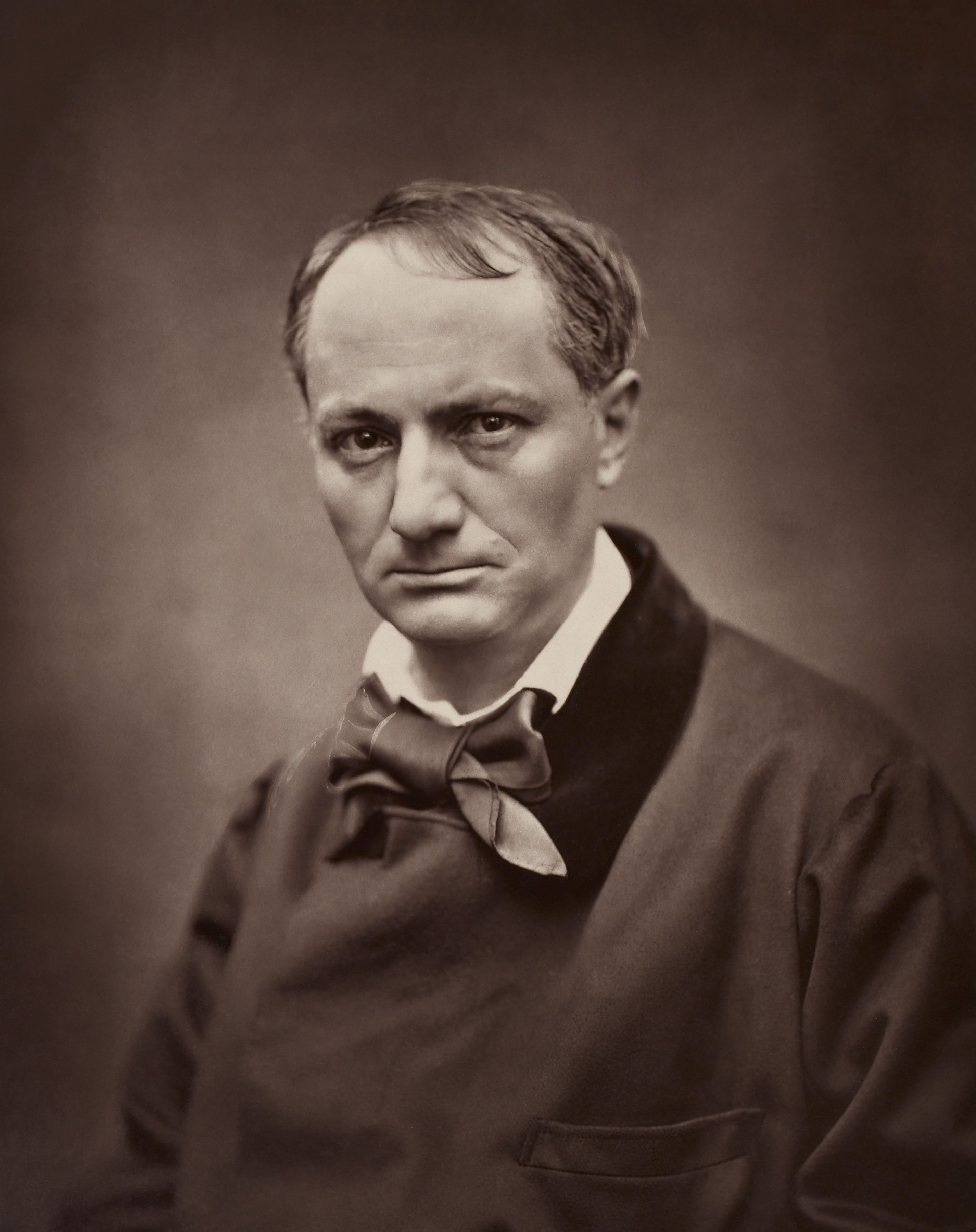
Charles Baudelaire
Étienne Carjat,
Public domain,
via Wikimedia Commons
The Flowers of Evil – Narrative of Baudelaire’s Poetic Odyssey

The city of Paris trembles beneath a veil of smoke and fog, its gas lamps flickering like tired eyes half-open against the night. Carriages rattle over wet cobblestones, and the Seine shimmers under a sky aching with gray. 

In an attic room, narrow and cold, a poet leans over a candle, pen hovering above the page. His face is sharp with sleepless thought, shadows deepening his cheekbones. 

His name is Charles Baudelaire, and he is ready to wrestle beauty out of corruption, light out of darkness, paradise out of despair.

His manuscript bears a title that shocks the polite world:
Les Fleurs du malThe Flowers of Evil.

The book does not move in a straight line; it spirals, descends, ascends, and burns. It is not a story with a beginning and end, but a journey through human experience, a pilgrimage through sin, ecstasy, and ruin. Yet it unfolds like a narrative, guided by one wandering soul — the Poet — who insists on confronting every contradiction within himself and the world.

He seeks meaning in a universe that feels like an abandoned cathedral where only echoes answer prayers.

He whispers to himself, a murmur stained with longing:

“Always to love what flees, and always to pursue what flies.”

Charles Baudelaire
Étienne Carjat,
Public domain,
via Wikimedia Commons

Spleen and Ideal: The Wings and the Chains

The journey begins with struggle. The Poet awakens not to dawn but to suffocation — a feeling Baudelaire names Spleen. The very air is thick, heavy as lead. 

He gazes out at the sky but sees only a lid of darkness pressing downward like an iron coffin. Time drips slowly, the hours crawling like wounded animals.

“I am like the king of a rainy country, rich but powerless, young and yet very old.”

His soul flutters like a trapped bird, trying to break free. When inspiration comes, it strikes like lightning — the dream of Ideal, the desperate belief in beauty, art, and transcendence. In those fierce moments the poet imagines himself soaring, wings beating against the sun, like the albatross captured on a ship’s deck:

“The Poet is like that prince of the clouds who haunts the storm and laughs at the archer.”

But reality drags him downward. Mockery, misunderstanding, and the mud of daily life crush him. The albatross — once majestic — becomes ridiculous, wings dragging uselessly on the planks. In the clash between dream and existence, man is both exalted and broken.

The Poisoned Fruit of Beauty

The Poet seeks salvation in Beauty, in sensuality, in women whose presence electrifies the senses. Their faces glow like stained glass, their perfume floats like incense, their voices tremble with the possibility of release.

But beauty does not heal; it intoxicates.

There is Jeanne Duval, fierce and volcanic, whose limbs move like molten gold. When she enters, the room seems to fill with a lush, tropical heat. The Poet-worshipper collapses before her radiance, caught between adoration and destruction. He knows her power; he feels the wound opening in his chest, but still he falls.

“You gave me your mud and I turned it into gold.”

Her love burns, and the poet becomes both priest and victim. Desire is a religion with altars made of flesh and blood, and the sacrifice is always himself.

And then there are other women — pale, mysterious, unreachable — spirits of marble and moonlight. They appear in dreams, in midnight silences, in cemeteries where flowers fade beneath the weight of time. He sees in their eyes the terror of mortality and the light of heaven, intertwined.

Every kiss is both salvation and venom.
Every caress is a window into paradise — and a fall.

Wine: The Temporary Escape

When love fails, he turns to wine, lifting a glass that reflects lamplight like liquid rubies. The world softens around him, the weight inside loosens, and life becomes briefly bearable. His body warms; laughter spills; sorrow recedes like a tide. He whispers to the bottle like an old confidant:

“Wine lights up the eyes of the people.”

For a moment, the Poet believes he has defeated pain. He walks through the streets imagining brotherhood with the workers, the drunkards, the exiled, the fallen. Wine grants wings, but they are only made of paper. They dissolve with morning light.

The Poet wakes with his mouth dry, his soul colder than before. The city rattles back to life, indifferent to his suffering. The reprieve is gone; the abyss gapes open once more.

Paris, the Suffering Queen

And still Paris surrounds him — beautiful and diseased. Fog curls through alleys where children starve under the gold balconies of the wealthy. The streets stink of garbage and perfume, of sweat and rotting flowers. In this city, Baudelaire sees modernity taking shape, monstrous and magnificent.

He watches workers marching with heavy boots, factory smoke filling the sky like industrial prayer. He looks at beggars, prostitutes, thieves, soldiers, and the wealthy who pass them without looking. The city crushes souls beneath its iron wheels.

And yet he loves it.
Paris is a queen whose crown is tarnished and whose gown is torn, but she still shines.

“To the city of my birth, where even the filth is gilded.”

He cannot escape it; it is part of his blood.

Evil, Sin, and the Seduction of the Abyss

The Poet turns inward now, toward the dark corners of the human heart where vice sits like a spider spinning silk. He does not preach morality; he unfolds experience. Lust, cruelty, jealousy, the hunger for power — each becomes a mirror in which he confronts himself.

In poems like “The Vampire” and “The Irremediable,” he depicts figures who drain the soul or ensnare it forever, symbols of inner demons that cannot be exorcised. He writes of pleasure tinged with horror, beauty spoiled by decay, the fascination of falling. The abyss draws him, not despite the terror, but because of it.

He whispers into the void:

“I have felt the wind of the wing of madness pass.”

The Poet faces humanity’s terrifying truth:
evil is not outside us — it lives within.

Revolt: The Cry Against Heaven

Feeling cornered by suffering, the Poet attempts rebellion against God Himself. He questions divine silence. He looks at a world twisted by injustice and demands answers that never come. In “The Litanies of Satan,” he invokes the ultimate symbol of rebellion, not from devotion but from defiance.

“O Satan, take pity on my long misery!”

It is the cry of a man abandoned by light, trying to forge meaning in darkness. The church hears blasphemy; the poet hears the truth of anguish. This revolt reveals not arrogance, but desperation — the last effort to be heard by a silent heaven.

Death: The Final Doorway

At last the journey approaches its end. Death stands not as terror, but as release. The Poet looks upon it with curiosity, even tenderness. In “The Voyage,” the last great poem of the collection, death becomes a ship prepared to carry him toward the only unknown left to explore.

He stands at the harbor, watching waves strike stone. The wind rises. The water swells. The horizon opens like a wound of light.

“O Death, old captain, it is time! Let us raise anchor!”

There is no triumphant salvation, no perfect conclusion — but there is peace, a quiet surrender. After a life warring against despair, the Poet steps forward, ready to shed the weight of existence.

The book closes, but the echo remains.

The Meaning of The Flowers of Evil

Baudelaire’s masterpiece offers not answers, but brutal honesty. It insists that beauty is born of decay, that light grows only in shadow, that human souls rise and collapse endlessly. It captures:

  • The crisis of modern identity

  • The brutality of urban life

  • The impossibility of purity

  • The double nature of love

  • The eternal war between heaven and earth

  • The urge to transcend human limits

The Poet becomes every person who has struggled in darkness and still reached out for light.