 |
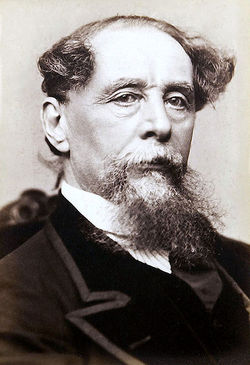
| Charles Dickens Jeremiah Gurney, Public domain, via Wikimedia Commons |
A TALE OF TWO CITIES
— A Narrative Retold in “Show" Style of Writing
I. The Two Cities Breathe
Fog rests heavy over the Thames, curling around wharves where ships creak in the evening tide. London breathes in long, tired sighs as horse-drawn coaches rattle over cobblestones slick with rain.
Across the Channel, Paris breathes too—faster, harsher—its narrow streets tense as whispers of revolution rustle like dry straw waiting for a spark.
The world groans under the weight of 1775, a year stretched thin between hope and horror.
And in this tension between two cities, lives begin to stir.
II. A Coach on Shooter’s Hill
Night presses down like a velvet curtain as the Dover mail coach struggles up Shooter’s Hill. Lantern-light flickers across anxious passengers whose gloved hands grip the seats. The air tastes of wet earth and fear—highwaymen haunt these roads.
Hoofbeats echo from the darkness.
But instead of bandits, a lone rider appears, mud-splattered and breathless, waving a message.
“Jerry! Message for Jarvis Lorry!” he calls, and the man inside the coach—a wiry fellow with restless eyes—leans out. The message he receives is short and startling:
“Wait at Dover for Monsieur Lorry. Recall: RECALLED TO LIFE.”
III. Tea, Steam, and Ghosts
The next morning, in a small room at the Royal George Hotel in Dover, a carefully dressed banker named Jarvis Lorry stares into his cup of tea as if it might answer the riddle for him. His face is respectable, every hair in place, but his hands tremble.
He is about to meet a ghost.
 |
| Lucy Manette - Image google by Gemini |
A young woman enters the room.
“My father died long ago,” she says softly. “I have been told this all my life.”
The room seems to tilt. The steam from the tea blurs the air between them.
Alive. After eighteen years in the Bastille.
The past, buried under layers of silence and fear, is about to rise again.
IV. The Shoemaker of Saint Antoine
Paris. A wine-shop on a crooked street where barrels leak red streaks across the dirt. Men stoop to scoop spilled wine with bare hands, laughing, drinking, staining themselves crimson.
Upstairs, behind a locked door, an old man shuffles in circles. His hands are calloused, shaped by years of repetitive labor. He bends over a bench where half-finished shoes lie in neat rows.
This is Doctor Alexandre Manette.
He barely remembers his name.
When Monsieur Defarge brings the strangers—Mr. Lorry and Lucie—up the stairs, the doctor does not look up. His fingers move over the leather, stitching, pulling, tying. Each tug is a memory of the Bastille cell that stole his life.
Lucie approaches quietly.Lucy and Dr. Manette Image by Gemini

“Papa?”
The word floats softly into the room, like a lantern into darkness.
Doctor Manette lifts his eyes. Something flickers—pain, confusion, hope—and with trembling fingers he touches the curls at her temples. As she cradles him, he clings to a lock of her hair like a lifeline.
Madame Defarge watches from below as the trio departs Paris for England. Her knitting grows longer.
She is stitching names into destiny.
V. Gentle Light in Soho
Time folds softly around the Manettes in London. On a quiet street in Soho, Doctor Manette begins to heal. His hands no longer twitch with the phantom rhythm of shoemaking. His mind clears in slow, fragile pulses.
Lucie becomes the heart of the home, bringing warmth like sunlight across a winter floor.
Their lives might have continued peacefully.
But history is never that gentle.
VI. A Trial at the Old Bailey
A crowd gathers at the Old Bailey as voices buzz like flies around a carcass. The trial of Charles Darnay, a French-born tutor accused of treason against England, has drawn hungry attention.
Darnay stands elegantly in the courtroom, calm despite the threat of death hanging over him. His eyes search the spectators until they rest briefly on Lucie, who sits beside her father.
A young English lawyer, Sydney Carton, slouches in a nearby seat. His clothes are wrinkled, his tie undone. His eyes—sharp even through exhaustion—notice something others miss:
Charles Darnay looks remarkably like him.
This resemblance becomes the fulcrum upon which Darnay’s fate tilts. The defense argues that if Carton resembles the accused so closely, eyewitness testimony is unreliable.
The jury agrees.
Darnay walks free.
But the moment Lucie speaks kindly to Carton afterward—acknowledging him when the world rarely does—something softens in him, like frost beginning to melt.
VII. The Double Life of Sydney Carton
London evenings are gentle things—streetlamps glowing through mist, carriages clattering toward home. Sydney Carton walks these streets alone.
Inside his messy chambers, he pours another drink, then another. Papers lie scattered; books sag on shelves. His mind, brilliant yet battered, churns restlessly.
When he thinks of Lucie Manette, his heart twists with longing so fierce it feels like grief.
One evening, he visits the Manette home. Lucie’s presence fills the room like warmth from a fireplace. Her kindness wraps around him without judgment. When she looks at him, it is as if she sees not the wreckage he carries, but something still worth saving.
“I would give my life for you,” he says quietly, “or for anyone you love.”
His words fall into the room like petals and stones at once—soft and heavy.
VIII. Storm Rising in France
Back in Paris, hunger gnaws at the poor like a wolf. The streets of Saint Antoine tremble with anger. At the Defarge wine-shop, men gather with clenched fists and low voices.
The storm finally breaks on a hot July day.
The Bastille stands against the sky like a fortress of oppression. Men swarm its walls. Smoke thickens the air. Screams echo between cannon blasts. The mob pours into the stone belly of the prison and drags out guards, officers—anyone associated with their suffering.
Monsieur Defarge enters a cell he once knew well.
Doctor Manette’s cell.
He stands in the shadowed room and feels the weight of memory pressing cold fingers against his neck.
The Revolution has begun.
IX. Peace in England, Fire in France
Soon their home echoes with a child’s laughter—little Lucie.
Sydney Carton becomes a quiet visitor, an affectionate shadow who never asks for anything. He plays with the child, speaks gently to Lucie, and watches Charles with a mixture of admiration and sorrow.
Every day, Madame Defarge knits new names into her register of death.
X. The Summons to Paris
Darnay hesitates. Yet guilt pulls at him—his family’s aristocratic legacy is a curse he has tried to escape, but one man’s life now hangs on his decision.
He leaves for France alone.
It is a grave mistake.
Upon arriving, he is arrested as a returning emigrant. Even his renunciation of the Evrémonde name cannot save him. He is thrown into La Force prison, surrounded by despair.
The Manettes depart at once for Paris. Sydney Carton follows quietly, unnoticed.
XI. The Tribunal of Blood
Paris is a furnace of terror.
Women sharpen knives in the street. Men chant for more executions. Blood from the guillotine forms dark rivulets on the stones.
Doctor Manette searches tirelessly for Darnay, invoking his reputation as a former Bastille prisoner. The revolutionaries revere him; they call him “One of Our Own.” His influence buys time—but not safety.
At last, Charles Darnay stands before the Revolutionary Tribunal.
Doctor Manette defends him passionately, recounting his own wrongful imprisonment by the Evrémonde family and declaring Darnay innocent of his ancestors’ crimes.
But Madame Defarge is relentless.
She brings forward a document—Doctor Manette’s secret letter, written long ago in the Bastille, condemning the Evrémondes for the horrors they inflicted on a peasant family. The youngest of that family? Madame Defarge herself.
The Tribunal roars with rage.
Charles Darnay is sentenced to die within twenty-four hours.
Lucie collapses into Doctor Manette’s arms. The old man stumbles, his sanity fraying beneath the weight of returning nightmares.
All seems lost.
XII. The Quiet Footsteps of Redemption
“I would give my life for you, or for anyone you love.”
He visits Mr. Lorry, who trembles at the sight of him.
“You look… like Charles,” Lorry whispers.
He arranges the details quickly: a coach to wait at a certain hour, a route out of France. Then he visits the Defarge wine-shop, observing Madame Defarge quietly. He sees no mercy in her eyes, only the relentless hunger of vengeance.
“For her,” he whispers. “For your child. For peace.”
Darnay collapses.
Sydney Carton remains.
XIII. The Farewell That Lives Forever
Carton stands among them.
He feels strangely calm.
As the cart rattles toward the guillotine, he sees a seamstress beside him, trembling. Her hands are small, delicate. She looks at him with wide, tear-bright eyes.
“You are not the man they think,” she whispers. “But I think it is a far, far better thing that you do…”
He thinks of Lucie: her soft voice, the warmth of her home, the life she will have because of him.
And he thinks of the words that have lived inside him like a dormant flame, now burning bright:
And somewhere on the road out of France, Lucie and her family race toward safety—toward life—never knowing the fullness of Sydney Carton’s sacrifice, yet living because of it.
XIV. Echoes Across the Cities
Whenever the family rests by the hearth, there is a stillness—a sacred space—where the memory of a man who gave everything lingers like a blessing.
Across the sea, Paris continues to churn through the turmoil of revolution, yet even its fiercest storms cannot erase the quiet, luminous act of one man’s redemption.

