Madame Bovary – A Story of Desire, Illusion, and Ruin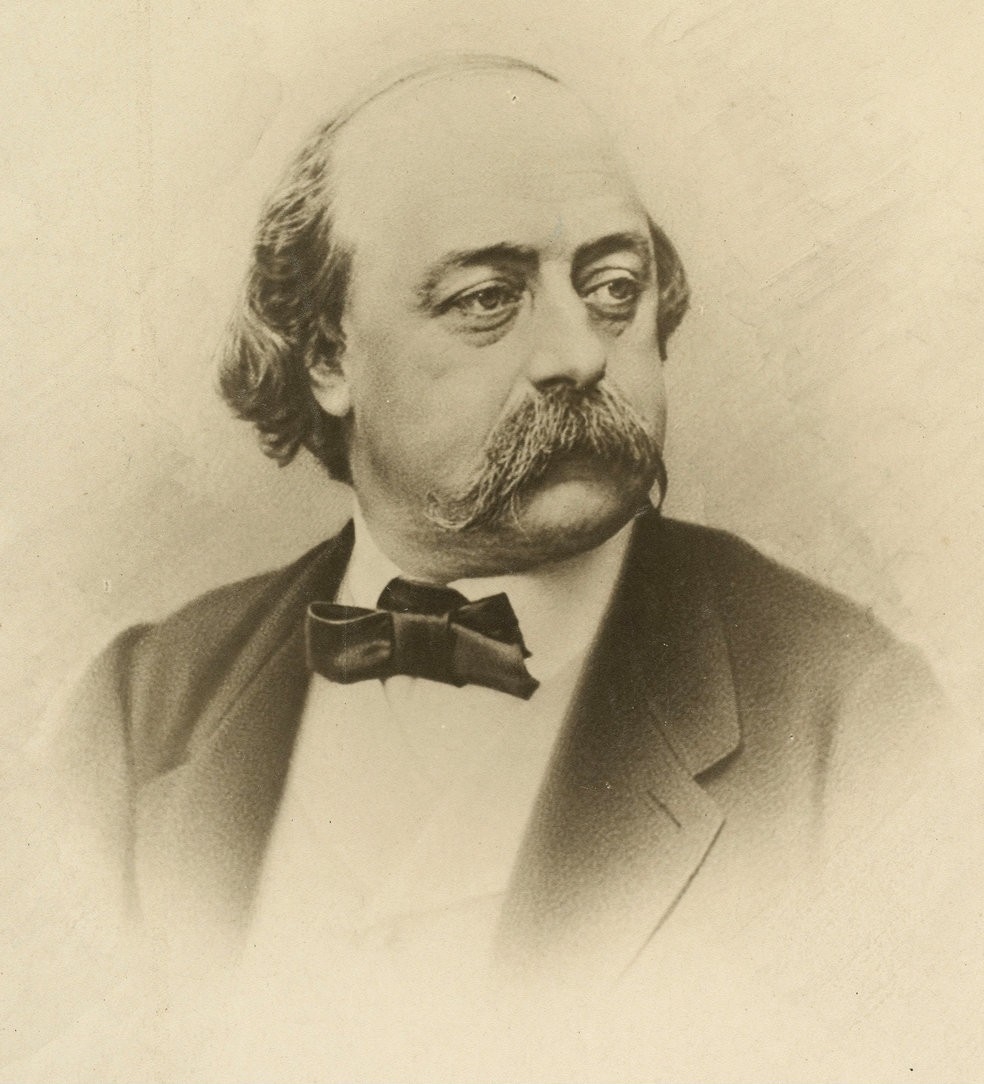
Gustave Flaubert
Nadar, Public domain,
via Wikimedia Commons
The wind sweeps across the flat fields of Normandy, bending the crops like bowing figures. In the town of Tostes, life settles in predictable rhythms — church bells, clattering carts, muddy boots, and the quiet endurance of rural existence.
It is here, in this world of repetition and stillness, that a young woman named Emma Rouault begins her descent into dreams she cannot afford.
The story begins not with Emma, but with the dull plodding life of Charles Bovary, a shy and awkward medical student placed behind the schoolroom desk where boys whisper and laugh at his clumsy attempts to say his name. Later he becomes a country doctor — mild, ordinary, earnest — a man who believes that happiness grows simply from routine and stability.
When he is called to attend to a farmer with a broken leg, he meets Emma. She stands framed by the doorway of her father’s farmhouse, sunlight catching the lace of her sleeves, her face calm and curious. Her voice is soft, her manners refined from years in a convent. Charles is stunned, heart pounding, feeling the world tilt around him.
The farm smells of apples and hay and rising bread. Emma’s fingers brush flour from a counter. She leads Charles through the orchard with shy grace. From the hedges comes the hum of bees and the rustle of wind through leaves — and Charles feels, for the first time, the sweetness of possibility.
Marriage and the Shape of Disappointment
After his first wife dies, Charles returns to Emma, trembling with hope. Soon they marry. The villagers gather with coarse laughter and muddy boots; ribbons flutter, wine spills, musicians stomp the floor. Emma smiles with polite delight but inside she feels something missing — a hollowness that she cannot name.
She has waited for life to begin, for passion to strike like thunder, for the world promised by the novels she devoured in the convent. Love, she had read, is an explosion, a fever. Yet her wedding morning feels ordinary, like slipping into shoes worn thin.
On their honeymoon, she watches the world through carriage windows — fields passing endlessly, cattle grazing, a horizon refusing to change. She presses her forehead to the glass, longing. She thinks of all the stories where love burns bright and unending. She wonders if she has chosen wrong.
Charles sees only comfort. Emma sees a cage.
“She had expected something to happen.”
The Confining Walls of Provincial Life
At their new home in Tostes, Emma decorates their rooms with dreams — velvet curtains, porcelain, patterned wallpaper. She sits at the piano, fingers trembling, playing phrases of longing. She opens her books, reading until candles sputter into darkness.
Charles returns from visits to patients, talking cheerfully about fevers and broken bones. Emma listens, nodding politely, while inside her heart grows tight with rage. The walls seem to close around her. Her hands tremble. The clock ticks too loudly.
She imagines grand balls, swirling gowns, chandeliers dripping with crystal — the life she believes she deserves, the world where she might finally be seen.
The Ball at Vaubyessard
One night, Charles receives an unexpected invitation from the Marquis d’Andervilliers to a grand ball. Emma’s heart leaps like a bird from a trap. She prepares for hours, arranging her hair, fastening silk slippers, staring at herself in the mirror with glowing anticipation.
The carriage approaches a glittering castle where windows blaze with golden light. Inside, perfume clouds the air; diamonds shimmer; violins sweep dancers into spinning color. Emma moves through the ballroom like a dream made flesh, drinking champagne and attention. Men bow, women whisper, chandeliers rain silver light on her skin.
She dances until dawn, breathless and alive. When she returns home, still glowing, Charles falls asleep at once. Emma lies awake, staring into the dark, clutching memories like jewels slipping through her fingers.
The next morning, the mud seems darker. The fields seem dead. The world seems unbearable.
“The memory of the ball burned in her heart.”
Days become quicksand. Emma grows pale, fevered with longing. Charles, worried, moves them to a new town: Yonville-l’Abbaye. But change of scenery changes nothing that is burning inside her.
Yonville and the First Stirring of Temptation
In Yonville, the Bovarys meet Monsieur Homais, the pompous pharmacist, overflowing with noisy opinions and self-importance. Emma listens politely while boredom gnaws at her bones.
More dangerously, they meet Léon Dupuis, the young law clerk with gentle eyes and artistic spirit. He speaks of poetry, Parisian theaters, and romantic longing — things Emma has only known in books. Their conversations shimmer. They walk through shady paths near the river, sunlight woven through leaves like lace.
Their hands nearly touch. Their gaze lingers too long. His voice trembles when he speaks her name.
But Léon is timid, and Emma is trapped by propriety. He leaves for Paris, heartbroken, unable to bear watching her sink in silence. Emma watches his carriage disappear on the horizon and something shatters inside her.
She clings to Charles — briefly — then collapses into despair.
Rodolphe and the Storm of Passion
Into that void arrives Rodolphe Boulanger, a wealthy landowner with the practiced smile of a seducer. He watches Emma at the agricultural fair, surrounded by cows and shouting men — her face luminous, aching for escape. He sees her yearning and decides she is easy prey.
As speeches drone on about progress and productivity, Rodolphe whispers to her about love, desire, and destiny. The contrast is electric. She trembles.
Their affair begins in secret rooms and winding forests. Emma experiences passion like fire consuming dry branches. Rodolphe’s hands, his voice, his boldness — everything she imagined love should be. She rides horses at his side, mud flying, wind lifting her hair like a banner of rebellion.
“She repeated, ‘I have a lover!’”
Her heart explodes with reckless certainty. She dreams of running away. Rodolphe, growing bored, agrees half-heartedly to leave with her. She packs trunks, writes farewell letters, plans her final escape.
But on the appointed night, she opens a letter instead:
“It is better this way.”
Rodolphe abandons her. Emma collapses, curling on the floor like something dying. Her screams rip the silence. Fever consumes her. For weeks she lies motionless, suspended between life and death.
Charles cares for her tenderly, unaware of everything.
The Return of Léon and the Spiral of Debt
Recovering, Emma grips religion like a drowning woman clutching a rope. But devotion cracks quickly. The hunger returns.
And then Léon returns from Paris — confident now, worldly, with the shadowed eyes of a man who knows longing. Their connection rekindles in stolen glances, in trembling hands, in rain-soaked carriage rides through narrow streets where fog hides everything.
They meet weekly in Rouen, shutting themselves inside dim hotel rooms where curtains billow like ghosts. Love becomes fever, an escape from everything she hates. Emma tells herself she deserves this happiness. She believes she has finally seized passion.
But love is expensive. Dresses, gloves, furniture, jewelry — she buys and buys, drowning in silk and lies. The merchant Lheureux smiles, extending credit like poison wrapped in ribbon.
Bills pile like storm clouds.
Collapse
Debt collectors arrive. Doors slam. Voices rise. Emma panics, running from room to room, breath shuddering, eyes wild. She begs Léon to save her. He hesitates, then recoils. He is young, frightened, powerless.
She runs to Rodolphe, pleading for money. He steps back coldly, arms folded. Emma stares at him in stunned silence, as if recognizing the full weight of her delusions.
Night falls. Rain lashes the streets. She rushes to the pharmacist’s shop and demands arsenic.
Clutching the vial to her chest, she runs home and climbs the stairs. The liquid burns her throat like fire. She collapses, body contorting, foam on her lips. Charles falls to his knees, helpless, sobbing over her twisting form.
Hours pass. The agony does not end.
Finally, stillness.
A hush settles, thick and suffocating. Charles presses his face to her cold hands and whispers her name as if prayer could reverse death.
Aftermath of Silence
Charles moves through the house like a ghost. He finds letters hidden in drawers — words of love not meant for him. The world fractures. Soon after, he dies as well, broken by grief.
Little Berthe, their daughter, is sent to work in a factory.
And in Yonville, life continues — Homais grows in influence, pride puffed like a parade banner, while Emma’s memory fades like dust dissolving in wind.
Themes and Meaning of Madame Bovary
Flaubert creates a world where:
-
Desire collides with reality
-
Romantic fantasy becomes a self-destructive weapon
-
Society suffocates individuality
-
The pursuit of beauty ends in ruin
Emma Bovary becomes not villain nor hero, but a mirror for all who dream beyond the limits of their world. She is punished not for loving too little, but for longing too deeply.

